

Fashion // Fine Art // Film // Design // Dance // Photography // Architecture // Music // Interior // Travel
20150305

20150304
Robert Wilson
Born October 4, 1941
An American experimental theater stage director and playwright
Also worked as a choreographer, performer, painter, sculptor, video artist, and sound and lighting designer
"I would come home from school, go to my room, and close my door and lock it.
I was not interested in playing with the other kids in the neighbourhood.
I was perfectly content to be alone.
My mother died at quite a young age – she was about 57 –
and shortly before she died she said, “You’ll get along just fine in this world.”
I asked her why and she said “Because you know how to be alone.”
It’s very curious that I ended up working in the theater
where you’re responsible for and you work with many people,
but it’s no problem for me."
KA MOUNTAIN from OpenEndedGroup on Vimeo.
"I grew up in a community that was ultra conservative, right wing.
Full of religious fanatics, and Seventh Day Adventists, Southern Baptists,
you know, it was a sin for women to wear pants, it was a sin to go to the theater.
It was a disgrace that Abraham Lincoln,
the President of the United States, was assassinated in the theater.
The theater was a house of ill repute.
It was immoral to go to the theater.
It was a very racist community.
You couldn’t walk down the street with a black man,
you couldn’t go to the same public toilet, there was a blacks’ toilet and a whites’ toilet.
And the public drinking fountain: there was whites-only drinking water.
So, I think I was very concerned about social justice from a very young age.
I was very disturbed growing up in this community,
and I think that’s been deeply rooted in all of my work.
As you know, my first major work in the theater was written with
a 13-year-old Afro-American boy
who had never been to school and knew no words and was deaf."
"My background was primarily in the visual arts, in architecture and painting,
so whatever I do, I usually bring a very strong visual book to the work
in terms of light, in terms of gesture,
sometimes scenery, props, furniture, sculpture.
I always think that what we see is what we see
and what we hear is what we hear,
and what we see should be as important as what we hear.
So often in the theater, what we see is secondary to what we hear,
and we think that the most important thing in the theater is
the text, is the book, is the word.
In an opera, it’s the music,
but the two primary ways in which we communicate with one another is
through our eyes and through our ears.
So I try to make the visual book not necessarily a decoration,
or there to simply support the audio book,
but it can parallel, it can be as important.
It is an equal partner and can reinforce what we hear,
without having to illustrate or decorate."
"It’s all architectural to me.
It’s construction and time and space, how to support this line of attention.
Sometimes it can be something in contradiction
and it makes more attention on the space, and sometimes it’s not.
They’re aesthetic decisions that are made in a construction in time and space,
so sometimes one can see, maybe,
a movement on stage that’s slower or different tempi than the music.
Or it’s an internal rhythm of the music;
sometimes it can be quicker and sometimes it can be exactly in the tempi of the music.
To me it’s boring
if all the walking and all the movements are exactly in the tempi of the music,
so sometimes there’s someone walking slower, someone quicker, someone with the music.
It makes a denser work, a more complex work.
It also relates more to the energy of the public.
You find that some people are in different mental rhythms in the audience.
Within a house there are very different mental vibrations of the public in the theater.
And the stage is like a battery,
so you can set up different energies in this battery that maybe relate to the entire audience."
Peter Pan from Anna Graenzer on Vimeo.
"Theater is something live, so it’s always something exciting.
There’s that risk, that danger that something might fail, something might not work.
And some people are looking for an alternative to the media and the mass electronic world.
So much of the theater that we have now reminds me of television:
most directors, most actors say something for the people to understand.
They say this, and you’re supposed to understand
what it is that you’re saying and what you’re doing.
It’s okay to get lost!
When I did Einstein, there was nothing for the audience to hang on to."
"I usually start with a structure.
The structure is quite rigid. So I have a strong form or frame.
A work like Einstein on the Beach is like that: Act One, Two, Three, Four.
Act One is A and B.
Act Two is C and A.
Act Three is B and C.
And Act Four is all three together, A, B, and C.
So, I knew it was going to be based on theme and variation,
and once I get that, I can be freer to fill in the form.
Without it, I don’t know how to fill it in –
it’s like an architect builds an apartment building:
you can live in the building, I can live in the building, other people can live in the building.
They each have their apartment to their own liking,
but the building has a cohesion because the architect has built it."
Philip Glass Robert Wilson - Einstein On The Beach - Act 4 - Spaceship - 2014 - Paris from Hugo Kessler on Vimeo.
"For me, one of the basic things of theater is that it should be accessible to anyone;
the man on the street or the man from Mars
should be able to walk into the theater and appreciate something.
Susan Sontag said in her essay Against Interpretation that
“the mystery is in the surface.”
And I think that’s true,
that somehow the surface of a work must be mysterious and accessible.
Whether one’s doing Shakespeare or Gluck’s Alceste,
there must be something very simple about it.
One must be able to tell one’s self,
if one is an actor or a director or author, the work is about this, something, very simple.
Then it can be about many things."
20150301

20150227
Marina Abramović and Ulay
Ulay (Born November 30, 1943) An artist based in Amsterdam and Ljubljana
In 1976, after moving to Amsterdam,
Abramović met the West German performance artist Uwe Laysiepen
and began their collaboration, explored the ego and artistic identity.
This was the beginning of a decade of influential collaborative work.
They formed a collective being called “The Other”,
and spoke of themselves as parts of a “two-headed body”.
They dressed and behaved like twins and created a relationship of complete trust.
They devised a series of works in which their bodies created additional spaces for audience interaction.
“The main problem in this relationship was what to do with the two artists’ egos. I had to find out how to put my ego down, as did he, to create something like a hermaphroditic state of being that we called the death self.”
In 1988, after several years of tense relations, Abramović and Ulay decided to make a spiritual journey which would end their relationship. They each walked the Great Wall of China, starting from the two opposite ends and meeting in the middle.
“We needed a certain form of ending, after this huge distance walking towards each other. It is very human. It is in a way more dramatic, more like a film ending … Because in the end you are really alone, whatever you do.”
At her 2010 MoMa retrospective, Marina performed The Artist Is Present, in which she shared a period of silence with each stranger who sat in front of her. Marina have had a deeply emotional reaction to Ulay when he arrived at her performance, reaching to him across the table between them.
Abramović met the West German performance artist Uwe Laysiepen
and began their collaboration, explored the ego and artistic identity.
This was the beginning of a decade of influential collaborative work.
They formed a collective being called “The Other”,
and spoke of themselves as parts of a “two-headed body”.
They dressed and behaved like twins and created a relationship of complete trust.
They devised a series of works in which their bodies created additional spaces for audience interaction.
“The main problem in this relationship was what to do with the two artists’ egos. I had to find out how to put my ego down, as did he, to create something like a hermaphroditic state of being that we called the death self.”
In 1988, after several years of tense relations, Abramović and Ulay decided to make a spiritual journey which would end their relationship. They each walked the Great Wall of China, starting from the two opposite ends and meeting in the middle.
“We needed a certain form of ending, after this huge distance walking towards each other. It is very human. It is in a way more dramatic, more like a film ending … Because in the end you are really alone, whatever you do.”
At her 2010 MoMa retrospective, Marina performed The Artist Is Present, in which she shared a period of silence with each stranger who sat in front of her. Marina have had a deeply emotional reaction to Ulay when he arrived at her performance, reaching to him across the table between them.
20150226
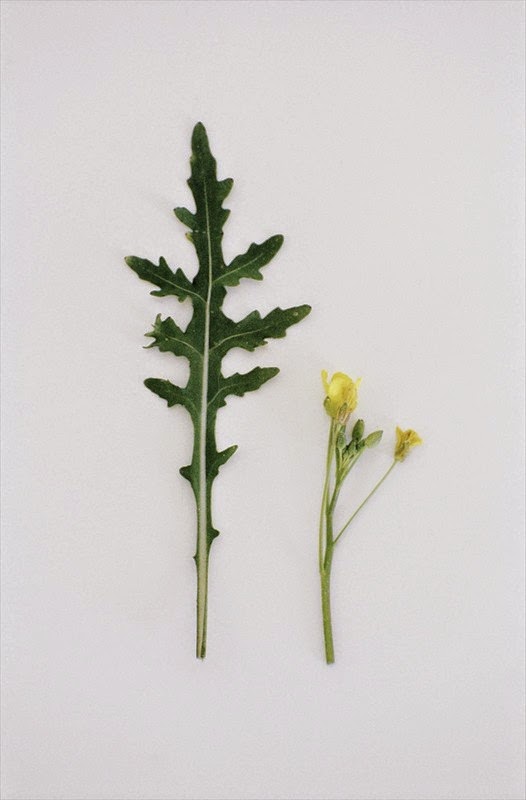
Benjamin Huseby's Weeds & Aliens
Benjamin Huseby is a Nowegian photographer
"Weeds & Aliens
is an occasionally arbitrary collection
of photographs of some rather wonderful, useful plants, normally considered weeds,"
“It is all at once a field guide, a photography book and an eco-polemic,”
"It is thought of as an introduction to the fragments of nature around us,
even in the most urban of habitats.
What is a wild plant, a native plant, an invasive or alien plant, a weed?
The story of weeds is the story of man and civilisation, of agriculture and migration.
There are no weeds in the wilderness,
but, then again, can we truly speak of wild nature?"
“Ever since I was a child I have been obsessed with taste, food and nature.
I remember vividly how I used to both impress and terrify other children
by eating raw stinging nettles when I was six.”
" I don't know how I first learned about what plants we could eat,
but I spent my whole childhood playing in forests and fields.
I think generally from growing up in Norway it was something ever present,
I was always tasting leaves and shoots.
I just loved the sensation.
Somehow I knew what not to eat as well. "
" The project started from me simply asking myself a question:
"What is it that I'm genuinely most interested in?"
So it is about a personal obsession,
but also follows in the footsteps of other projects I have done as an artist,
mostly working with ideas of ecology.
It also has a connection to food, another obsession,
as all the plants in the book have be used in meals for me and friends,
often in my studio."




Cathy Van Hoang
is a LA-based designer and art director
She uses sea urchin shells as upside down planters for air plants to create little aerial jellyfish.


click here to see more beautiful works
20150115

Subscribe to:
Posts (Atom)
